Back in April, GitHub shared a staggering graph of their scaling challenges:
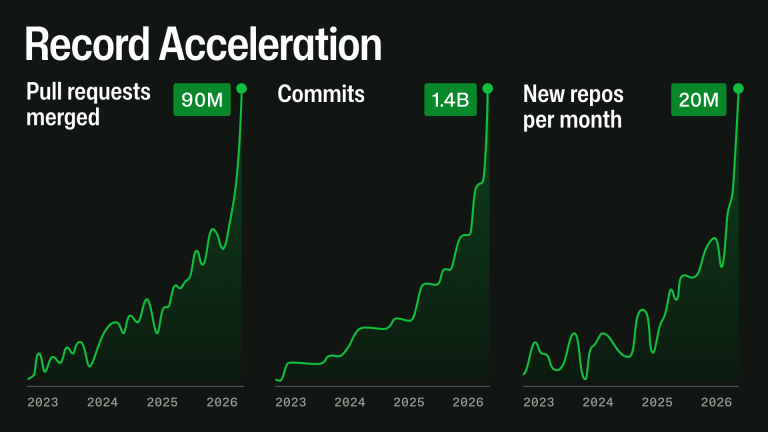
LLMs are producing code at an almost frightening rate, and if you use GitHub on a semi-frequent basis, you’ll know that it’s down quite regularly these days as a result of the onslaught.
For my own personal work, rather than tolerate the GitHub instability, I’ve instead opted to self-host my own Forgejo instance in my basement server rack.
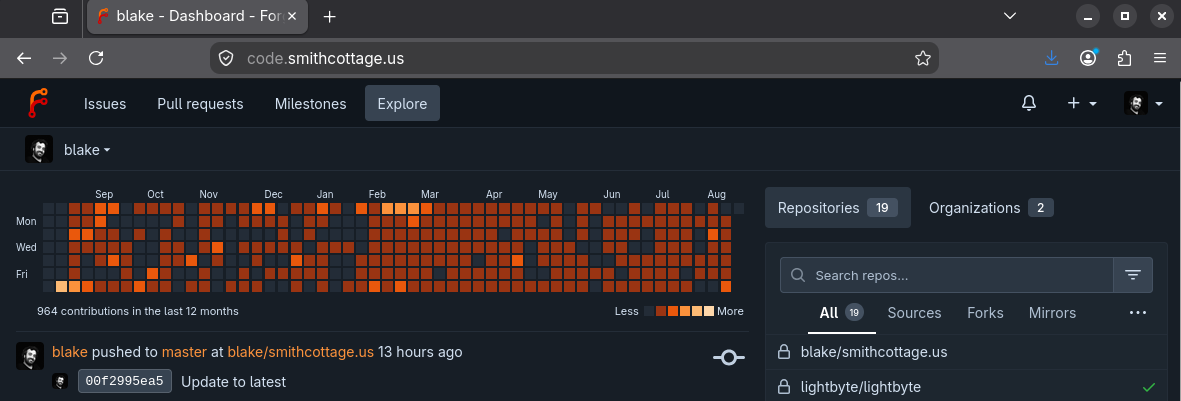
This is yet another important step in reclaiming my own computing sovereignty. While the world is busy spraying gigatons of slop all over GitHub, I’m taking back ownership of the code that’s always been mine. Growing in my craft means not just owning the work, but also building the tools and the environment that the work gets produced in. I aspire to build the Hans Zimmer music studio of computing.

Running my own private code forge has been a joy, especially with “push to create repository” Forgejo feature turned on. This enables any whimsical hairbrained idea to quickly become a git repository stashed for my own private creation. If I want to live a creative life, full of Big Magic, I have to start with the basics: doing a huge volume of work. A private code forge is a great scratch-pad to sink ideas into.
If you’re looking for a sign to bring your code “back home”, either personally, or at your company, the graph above might be the right signal that it’s time to take a look at self-hosted options. Forgejo is definitely worth a look!